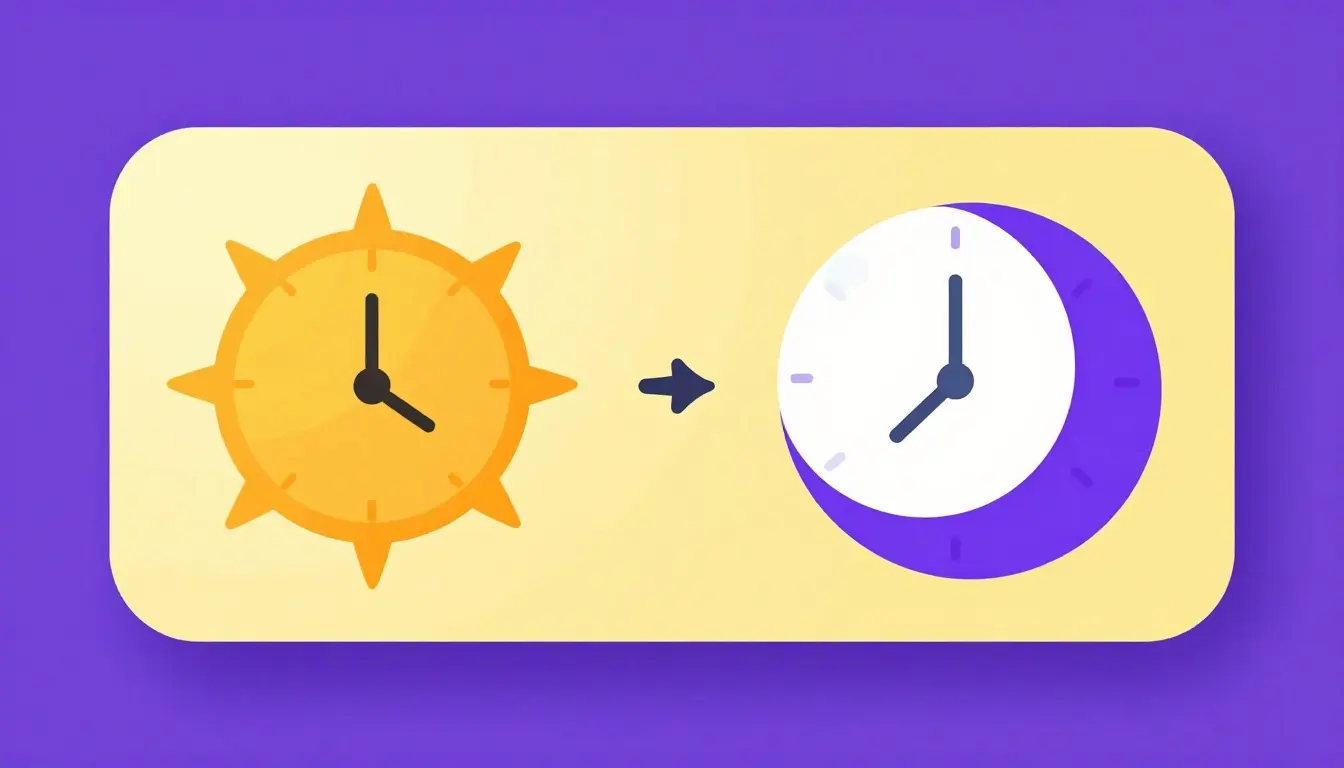
Your geyser does not care what time it is, but your bill does. Under a time-of-day tariff, the same unit of electricity costs noticeably different money depending on the hour you use it, and ordinary households are discovering that a small habit change around the clock is worth a real cut in the monthly total. The idea sounds complicated. In practice it is one set of heavy appliances, moved into the cheap hours, and a tariff table with three rows.
Time-of-day pricing, ToD for short, turns your meter into a clock watch. It records not just how many units you used but when you used them, and the bill prices each block of hours separately. The evening peak becomes expensive, the middle of the day becomes cheap, and the night often sits in between. In the states that have switched it on, that one change is helping households save twenty percent or more without turning off a single thing.
One Day, Three Kinds of Power Prices
For decades an Indian home paid one rate, whether the grid was empty at 2 pm or strained to its limit at 8 pm. A time-of-day tariff breaks the day into windows and charges each window its own rate. The peak window, the evening hours when solar generation dies and every family turns on its lights and fans at once, is priced dear. The solar window, the daytime stretch when the sun floods the grid, is priced cheap. A normal window in between carries the base rate.
The logic is simple market pressure. The last megawatt needed at 8 pm costs far more to produce than the same unit at 2 pm, because the grid calls on expensive peaking stations in the evening. ToD makes that true cost visible in the bill, and it rewards the consumers who choose to shift. The grid relaxes, the peaks flatten, and part of the saving returns to you as a lower rate.
Smart Meters Are What Make It Possible
None of this works without the right meter. An ordinary electromagnetic meter counts only the total units, it cannot tell who was used at 9 AM from who was used at 9 PM. A smart meter records the consumption inside each time block and reports those slices separately, which is precisely what lets a discom bill a peak unit differently from a solar-window unit.
That is why the time-of-day rollout has quietly travelled on the back of the smart-meter programme. Under the central RDSS scheme, millions of conventional meters are being replaced with smart ones, and the states with the largest deployments have begun switching the tariff over. Meter first, then the tariff, is the order in most of India today. Which consumers are already on ToD, and which still wait, depends entirely on the meter on their wall.
The Bihar 2026 Table, Read at Home
Bihar is the cleanest household example running. From April 2026, consumers on smart prepaid meters face three time blocks built around a base rate of ₹7.42 per unit. The cheapest window is the daytime solar block, and the expensive one is the evening peak, all variations from that base.
| Bihar block (from 1 Apr 2026) | Hours | Rate per unit | vs base rate |
|---|---|---|---|
| Off-peak (solar window) | 9 am – 5 pm | ₹5.94 | 20% off (₹7.42 → ₹5.94) |
| Normal | 11 pm – 9 am | ₹7.42 | Base rate |
| Peak | 5 pm – 11 pm | ₹8.16 | 10% premium (₹7.42 → ₹8.16) |
Keep the times in your head: the solar window is 9 am to 5 pm, the peak is 5 pm to 11 pm, and the late-night block is back at the base. Notice that the direction matches real grid physics. Midday power is cheap because the sun is pouring into the grid; evening power is dear because everyone is on, and solar has left for the day.
What the Difference Is Worth Day to Day
Sit with the numbers and the size of the prize becomes clear. Every unit you shift out of the peak and into the 9 am to 5 pm window saves you the gap between ₹8.16 and ₹5.94, about ₹2.22 per unit. Move 100 units a month across that line and you have quietly saved around ₹222, more than some discoms' fixed charge.
A family that shifts its geyser, its washing machine, its iron work and an electric vehicle into the solar window can realistically relocate a large share of its monthly units onto the cheap block. For a household using 300 units, moving a third of them across the gap is worth close to ₹220 every month, well over ₹2,500 a year. That is the honest arithmetic some describe loosely as "pay 20% less", it is a percentage you can measure in your own bill.
Which Loads Are Worth Moving
Start with the appliances that consume the most per hour, because they are the ones whose move matters. The list usually looks like this:
- Geyser or water heater, the single largest shiftable load in most homes, heat the tank before 5 pm and tank water stays warm through the peak.
- Electric vehicle, schedule its charge for the off-peak block, overnight or midday depending on your state's window, and the per-kilometre cost drops sharply.
- Washing machine, dishwasher and iron, small clocks on the day planner, they run identically at noon and at 8 pm.
- Air conditioner, pre-cool the room in the late afternoon if your state's cheap block is daytime, and set the timer for the after-dinner window.
None of this asks for sacrifice. The appliances run anyway, they just run at the cheaper hour. If you also have rooftop solar, the day shifting doubles its value, because midday consumption draws directly on your own generation rather than on peak power from the grid.
The First Bill Under ToD Can Surprise
One warning, before the savings story runs away with itself. The first bill under time-of-day pricing is the one that shocks people, and the culprit is usually not the tariff itself. A new smart meter, installed during the switch, often catches consumption the old meter was undercounting, so the first cycle looks inflated rather than discounted. Families who believe the meter is faulty too easily dismiss a genuinely changed tariff at the same time. When your smart-meter bill climbs in your first ToD cycle, our guide to why smart-meter bills seem to double explains the units-per-day test that separates a real change from a scare.
And because the whole future of the tariff depends on the meter, ask what kind you have before you start planning around the time blocks. The mechanics of prepaid and smart meters, how the top-up works and when disconnections bite, are unpacked in the guide to prepaid smart meters in India. A conventional meter simply cannot participate, so check that first and everything else follows.
Whose Bills Benefit Most
ToD is kind to flexible households and mildly awkward for rigidly evening-heavy ones. If your routine piles cooking, cooling and washing into the 5 pm to 11 pm window because you come home from work and the house suddenly lights, your bill can climb until you adopt a couple of swaps. If you are at home through the day, work evenings, or drive an EV, you were effectively being penalised by the old flat rate, and ToD pays you back.
The protections ride on the rate margins: a peak cannot exceed the base by an unreasonable amount, and the cheap window carries a healthy discount, so the ceiling on damage is modest even if you never change a habit. The bulk of the opportunity, since the cheap door is wide open, sits with the families willing to move the heavy draws off the evening. That is the whole game, in one sentence and one switch.
FAQs
When does the ToD tariff apply to me?
It applies where smart meters are actually deployed, and states are enabling it progressively under the RDSS rollout. Bihar switched smart prepaid consumers to ToD from 1 April 2026. Ask your discom or check your bill to see whether your meter already records time blocks.
Can a current meter support ToD?
Only smart meters can measure consumption by time window. A conventional meter bills a flat rate regardless of the hour. If yours cannot record blocks, the discom applies the old structure until the meter is upgraded.
What are solar hours in a ToD design?
In Bihar's 2026 scheme the solar window runs 9 am to 5 pm at a 20% discount. Each state fixes its own window, generally the hours when grid generation is abundant, and rates in that block sit below the base.
Can I really save 20%?
The rate structure allows it: a unit shifted from peak to off-peak in Bihar saves about ₹2.22, roughly 20% of the base rate per unit moved. How much you actually save depends on the size of the load you can shift.
Does ToD change my subsidy?
Subsidies are usually computed on units and energy charges before block pricing, but treatment is not yet uniform, and some states have begun adjusting it for ToD consumers. Check your state's tariff order for the interaction.
Will my bill rise before it falls?
Possibly. The first bill after a meter replacement can look worse because the new meter records more accurately than the old one. Do the units-per-day check against last year to tell a real change from a tariff effect.
Founder & editor, BijliCalculator.in. Bijli tariffs, slab system aur DISCOM billing rules ko simple bhasha me samjhata hai — har number SERC tariff orders se verify karke. Koi correction ya sawaal ho to contact page par likho.
Related reads

Smart Meter Bill Doubled?
Why the first smart-meter bill shocks — and the units-per-day test.
Prepaid Smart Meters in India
How pay-before-use metering changes topping up and disconnection.

How to Reduce Your Bill
Load-shifting, efficiency and tariff knowledge in one playbook.