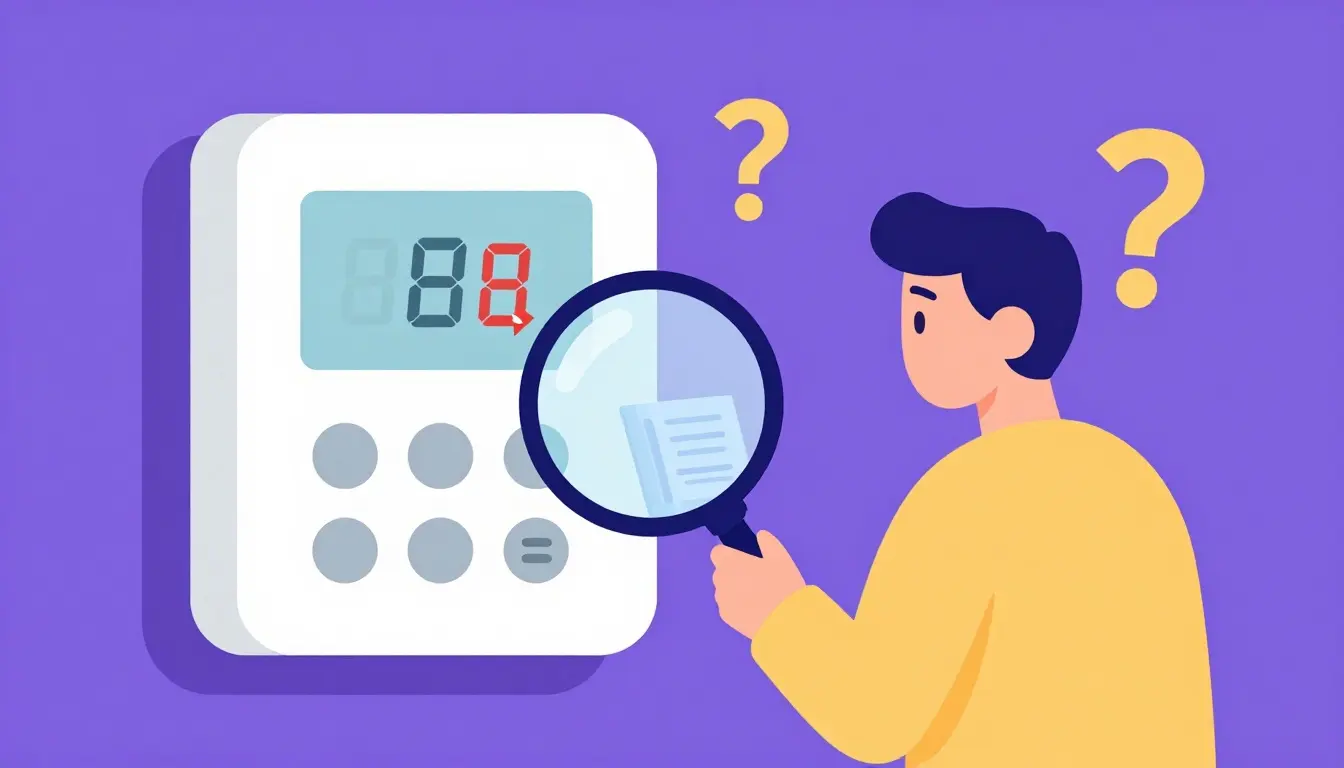
Most electricity bills in India are based on actual readings — a meter reader visits your premises, notes the figure on your meter, and the discom bills you for the difference since the last visit. But not always. Look closely at your bill and you may find a small "E" or the word "Est." next to the reading. That letter means nobody read your meter this cycle, and your bill is a calculated guess instead.
An estimated bill is not a scam, but it is worth understanding completely, because the correction always arrives later — usually in the form of a bill that looks shockingly high. This article explains how estimates are made, why the next bill jumps, and exactly how the correction cycle works, with real examples from Indian discoms.
How Normal Meter Reading Works
In a normal cycle, a meter reader (or a mobile reading app on a hand-held device) records the current reading from your meter. Your consumption for the month is the simple difference between the current reading and the previous reading, as recorded on your bill. If the meter has a multiplier — usually 1, but sometimes 10 or 100 for high-tension connections — that difference is multiplied by it before charges are applied.
The formula is always the same: units billed = current reading − previous reading, multiplied by the meter multiplier if one is shown on the bill. You can verify every month's units against this formula using the two readings printed on the bill itself.
Why Estimated Readings Happen
Estimates are triggered when the meter reader cannot access the meter. The reasons are mundane: the premises were locked, a dog or a locked gate blocked the path, the reader arrived during your absence, or the discom was simply short-staffed that cycle. In rural areas and apartment complexes, access problems are frequent enough that most households see an estimated bill at least once a year.
The discom is not allowed to leave you unbilled, so it generates an estimated figure instead. That estimate is based on your own consumption history — specifically, most discoms use the average of your previous three months of actual usage. It is not a random number; it is a reasonable guess anchored to your own habits.
A concrete 2026 example: BESCOM in Bengaluru billed July 2026 on estimated readings while its meter readers were deployed on the Gruha Jyothi scheme, and told consumers that actual billing would resume in August. Same story, every state, every year — an operational gap turns into an estimated cycle for a whole city.
What the Estimate Is Computed From
If you want to predict your estimated bill, use the average method yourself. Take the units from your last three bills, add them, and divide by three. That number, applied over the same number of days, is very close to what the discom will bill.
Two important wrinkles. First, the estimate is applied to the billing period — if the estimate covers 35 days instead of 30, the figure is scaled up proportionately. Second, the estimate does not know about big changes in your life: a new AC installed in April does not show up in an estimate built on March, February, and January usage. You will be billed for that AC only when the meter is next actually read.
The Correction Cycle: Why the Next Bill Jumps
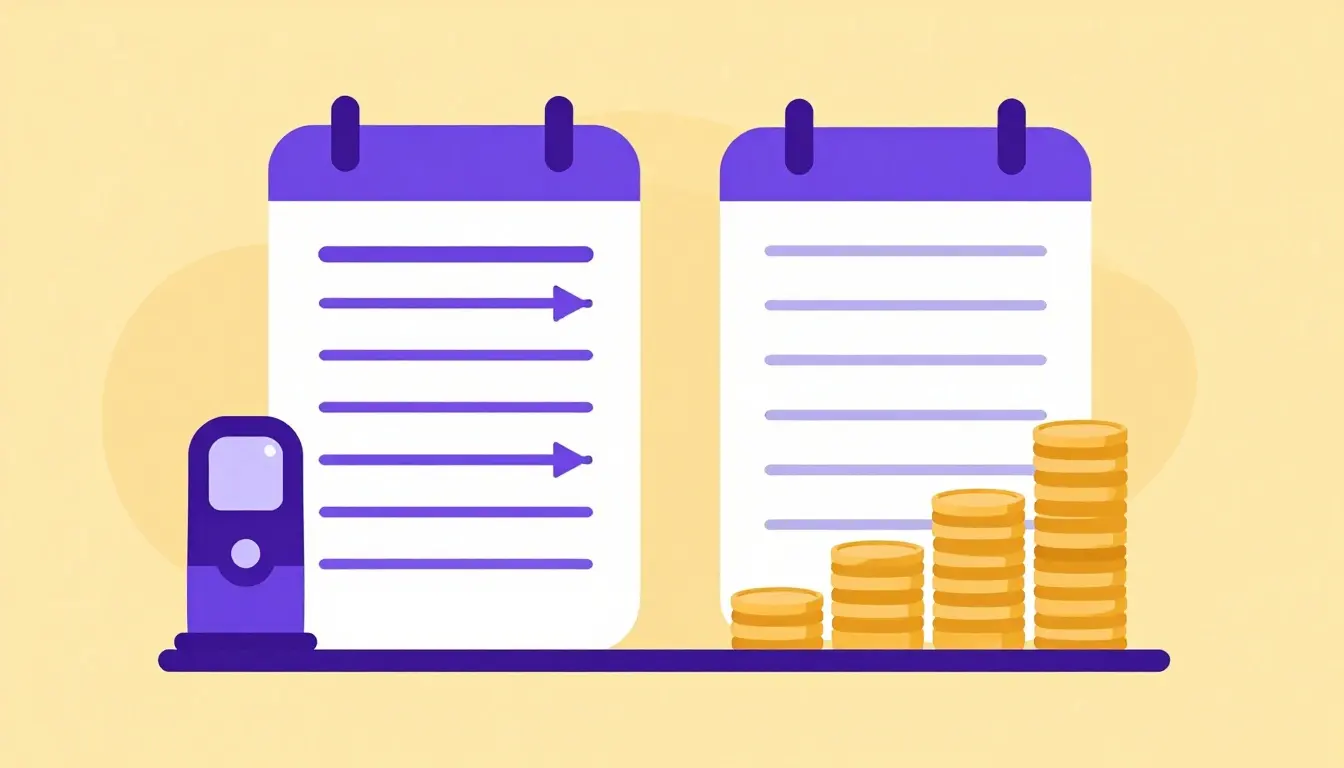
Here is the part that surprises most people. When the meter is finally read for real, the discom compares the true reading with what the estimates assumed. If the estimates under-billed you — and they usually do, because usage tends to rise over time — the shortfall is added to the next bill in one lump.
So an estimated month is typically followed by a "shocking" bill: month one is billed on the average, month two settles the difference plus the current month's actual usage, all in one total. The reverse also happens: if you actually used less than the estimate, the excess is credited, and a month can arrive with a small or even negative charge. The jump, in other words, is the correction — not a new problem.
This is exactly the mechanism behind many "my bill doubled" complaints, and it is the same family of issue as smart-meter catch-up billing, where a changeover settles months of estimates at once.
What "E" Looks Like on Your Bill
The estimated flag appears in a few places depending on the discom: next to the current reading as "E" or "Est.", in the bill description line, or as a remark like "BILLED ON AVERAGE" or "R/O (Reading on Average)". Some bills show it only in the fine print below the tariff table.
| Line on the bill | What it means | What happens next |
|---|---|---|
| Current reading marked "E" | This cycle was estimated, not read | Actual reading will be taken next cycle |
| No "E" mark | Actual reading taken | Units are final for this cycle |
| "Bill on average" remark | Average of past consumption used | Difference is adjusted in the next bill |
| Shortfall or excess line | Prior estimate corrected | Added to or credited from this bill |
If you see no "E" but the figure still looks odd, the reading may simply have been entered wrongly — see our guide on checking your meter reading in five minutes.
Real Examples of Reading Errors
Readings can go wrong in more creative ways than estimates. Two real-world patterns are worth knowing about. The first is interchange: in a KSEB case, the readings of two neighbouring consumers were swapped in the reader's handheld device, so each household received the other's consumption. Neither household's usage had changed at all — the data had.
The second is delayed readings. Assessors are allowed a small cushion of days beyond the scheduled date, but when readings lag by one to two months, the eventual bill covers a much longer period and looks inflated. Chennai consumers have filed complaints with TNPDCL over exactly this, receiving bills that covered 60–90 days of usage in one figure. The bill is not wrong in total — it is wrong in presentation.
How to Check Your Reading Yourself
You can verify almost anything with the meter itself. Find your meter — usually in a meter box, on a pole, or in the common area of an apartment building. Read the whole numbers, ignoring the red dial or the last digit that spins with small loads. Then apply the formula: current reading − previous reading (from your bill) = units billed.
For a digital meter, the display cycles through readings automatically; note the figure for kWh. Photograph the meter with your phone — and make sure the phone's clock is visible in the photo, either in the frame or by taking a screenshot with the date overlay, before you complain about anything.
Keeping your own reading log turns spooky bills into solved ones. Every cycle, jot down the date, the meter reading, and the units billed. After three or four entries you have a personal baseline that makes an estimated month, a delayed cycle, or an interchanged reading instantly visible — before a complaint is even needed.
How to Complain If a Reading Looks Wrong
- Check whether the bill is marked "E" — if it is, expect a correction next cycle and compare units per day rather than totals.
- If an actual reading looks wrong, register a complaint on the discom portal or the 1912 toll-free line and note the complaint number.
- Attach your dated meter photograph and ask for a re-reading or verification.
- If the dispute persists, escalate through the CGRF and then the Electricity Ombudsman, following the same ladder used for bi-monthly bill disputes.
FAQs
What does "E" or "Est." mean on my electricity bill?
It means the bill was based on an estimated reading because the meter reader could not access your meter. The estimate is usually the average of your previous three months of usage, and the actual reading is taken the next cycle.
Why is my bill higher after an estimated month?
Because the correction arrived. When the real reading was taken, the shortfall between the estimate and your actual usage was added to the next bill in one lump. The jump is the settlement of the earlier under-billing.
Can an estimated bill be credited if I used less?
Yes. The same correction cycle works both ways. If the estimate was higher than your actual usage, the excess is credited to the next bill, which can arrive lower than normal.
How do I check whether my bill used my real reading?
Read your meter, note the whole-number digits, and subtract the previous reading shown on the bill. If the result matches the billed units, the reading was used correctly. Photograph the meter first, with the date visible, before raising a complaint.
What if the discom bills estimates for months?
Write to the discom and request an actual reading, or self-report your reading if the discom offers that option. Keep your own monthly reading log so you can verify the eventual correction bill.
Founder & editor, BijliCalculator.in. Bijli tariffs, slab system aur DISCOM billing rules ko simple bhasha me samjhata hai — har number SERC tariff orders se verify karke. Koi correction ya sawaal ho to contact page par likho.